
IPDL Kits User Manuals
Internet of Things (IoT) — IDPL Laboratory
IoT Development Boards, Platforms, Sensors, Actuators, Cloud & Communication Protocols
| Laboratory Overview | |
|---|---|
| Subject | Internet of Things / IDPL |
| Laboratory Type | Practical / Experiential Learning |
| Platforms | Arduino, NodeMCU, ESP8266, ESP32, Raspberry Pi |
| Technologies | IoT, Cloud, Web, MQTT, REST, TCP/UDP, IEEE 802.15.4, 6LoWPAN |
| Target Users | Diploma / Undergraduate Students |
Laboratory Hardware
-
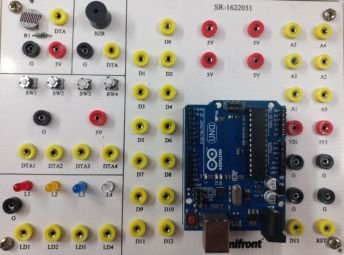 Arduino Uno BoardUsed for Arduino programming, LED control, sensor interfacing and Bluetooth-based automation experiments.
-
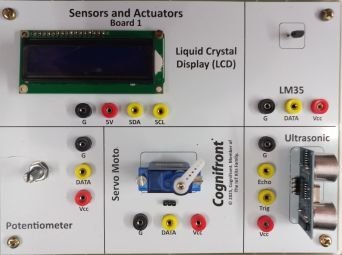 Sensor & Actuator BoardIncludes sensors and actuators used for temperature, light, distance, display, servo and automation experiments.
-
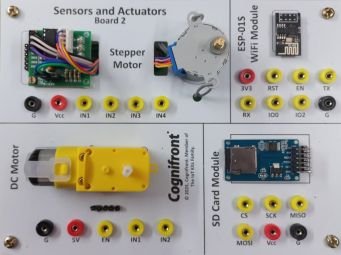 IoT & Actuator BoardIncludes DC motor, stepper motor, ESP-based communication and other IoT-oriented interfaces.


Objectives
The objectives of this laboratory are to:
- Understand different development boards used for Internet of Things applications.
- Study and compare different IoT platforms and cloud services.
- Develop basic IoT applications using Arduino, NodeMCU, ESP8266, ESP32 and Raspberry Pi.
- Interface sensors and actuators with IoT development boards.
- Implement IoT-based monitoring and control applications.
- Understand cloud connectivity and IoT data visualization.
- Develop web-based IoT applications using HTTP.
- Understand IoT communication protocols such as MQTT, REST, TCP/UDP and 6LoWPAN.
- Develop small IoT solutions for real-world problems.
Experiments
Group A — Compulsory Experiments
| ID | Experiment | Platform / Technology |
|---|---|---|
| IDPL - 1 | IDPL - 1: Study and Survey of Various Development Boards for IoT | Arduino, NodeMCU, ESP8266, ESP32, Raspberry Pi |
| IDPL - 2 | IDPL - 2: Study and Survey of Various IoT Platforms | IoT Platforms / Cloud Platforms |
| IDPL - 3 | IDPL - 3: LED Blinking with Arduino Uno | Arduino Uno, LED |
| IDPL - 4 | IDPL - 4: IoT Sensor Interface with Arduino | Arduino Uno, Temperature / Light Sensors |
| IDPL - 5 | IDPL - 5: Integration of Actuators with NodeMCU | NodeMCU, Servo Motor, Relay |
| IDPL - 6 | IDPL - 6: DC Motor and Stepper Motor Control with Raspberry Pi | Raspberry Pi, DC Motor, Stepper Motor |
Group B — Any Three Experiments
| ID | Experiment | Platform / Technology |
|---|---|---|
| IDPL - 7 | IDPL - 7: LED Control Using ESP8266 and Blynk App | ESP8266, Blynk |
| IDPL - 8 | IDPL - 8: Cloud Ready Temperature Sensor Using Raspberry Pi and ThingSpeak | Raspberry Pi, DHT11, ThingSpeak |
| IDPL - 9 | IDPL - 9: Web-Based Home Automation Using Arduino Uno and Bluetooth | Arduino Uno, Bluetooth, Home Automation |
| IDPL - 10 | IDPL - 10: HTTP Server Using ESP32 for Actuator Control | ESP32, HTTP, Web Server, LED, Buzzer, Relay |
| IDPL - 11 | IDPL - 11: Web-Based Display of Humidity and Temperature Data | Temperature / Humidity Sensor, Web Application |
Group B Requirement: Any Three experiments from IDPL-7 to IDPL-11 are to be performed.
Group C — Mini Project
| ID | Mini Project | Key Technologies |
|---|---|---|
| IDPL - 12 | IDPL - 12: TCP/UDP Server for Sensor Data | Arduino / Raspberry Pi, TCP, UDP, Sensor Data |
| IDPL - 13 | IDPL - 13: 6LoWPAN Protocol Demonstration | 6LoWPAN, IPv6, IEEE 802.15.4, IoT Gateway |
| IDPL - 14 | IDPL - 14: Temperature Publishing Using MQTT / RESTful APIs | Temperature Sensor, MQTT, REST API |
| IDPL - 15 | IDPL - 15: IoT-Based Small Project | IoT, Simulation Platforms, Automation, Social / Environmental Applications |
Group C Requirement: One mini project is to be performed by a group of 3 students.
Group C — Mini Project Guidelines
Students may select one of the prescribed mini-project topics or develop an IoT solution based on a small real-world problem statement.
Possible application areas include:
- Smart Home / Home Automation
- Environmental Monitoring
- Social Issues
- Chatbot-based IoT Applications
- Smart Agriculture
- Smart Campus
- Industrial IoT
- Energy Monitoring
- Safety and Security
The project may be implemented using physical IoT hardware or an IoT simulation platform such as Tinkercad or Cooja, depending on the selected problem statement.
Technologies Covered
| Category | Technologies / Platforms |
|---|---|
| Development Boards | Arduino Uno, NodeMCU, ESP8266, ESP32, Raspberry Pi |
| Sensors | Temperature Sensor, DHT11, Light Sensor and other IoT Sensors |
| Actuators | LED, Buzzer, Relay, Servo Motor, DC Motor, Stepper Motor |
| Cloud Platforms | Blynk, ThingSpeak and other IoT Platforms |
| Web Technologies | HTTP, Web Server, Web Application |
| Communication | Bluetooth, TCP, UDP, MQTT, REST |
| Networking | IPv6, IEEE 802.15.4, 6LoWPAN |
| Simulation | Tinkercad, Cooja |
Learning Outcomes
After completing this laboratory, students will be able to:
- Identify and compare different development boards used in IoT applications.
- Select appropriate IoT platforms for a given application.
- Program Arduino, ESP8266, ESP32, NodeMCU and Raspberry Pi platforms.
- Interface sensors and actuators with IoT development boards.
- Develop basic IoT monitoring and control applications.
- Connect IoT devices to cloud platforms.
- Develop web-based IoT control and monitoring applications.
- Implement basic IoT communication using MQTT, REST, TCP and UDP.
- Understand IPv6 communication over IEEE 802.15.4 using 6LoWPAN.
- Design and implement a small IoT-based solution for a real-world problem.
Experiment Workflow
The general workflow for performing the experiments is:
- Understand the objective and problem statement.
- Identify the required development board, sensors and actuators.
- Study the circuit / hardware connections.
- Connect the required components.
- Install and configure the required programming environment.
- Write or modify the program.
- Compile and upload the program to the development board.
- Establish the required network, Bluetooth or cloud connection.
- Test the IoT application.
- Observe and record the results.
- Troubleshoot hardware, software and communication issues.
- Document the experiment and conclusion.
Software & Development Tools
| Tool / Platform | Purpose |
|---|---|
| Arduino IDE | Programming Arduino, ESP8266, ESP32 and compatible boards. |
| Blynk | Mobile / web-based IoT device control and monitoring. |
| ThingSpeak | Cloud-based IoT data collection and visualization. |
| Tinkercad | Simulation of Arduino and electronic circuits. |
| Cooja | Simulation and experimentation with IoT / low-power networks. |
| Web Browser | Accessing web-based IoT dashboards and ESP32 web servers. |
| Serial Monitor | Debugging and monitoring communication between the computer and IoT board. |
Experiments Mapping with Kit
The following document provides the mapping between the prescribed IDPL experiments and the components available in the laboratory kit.
📄 Download IDPL Experiments Mapping (PDF)
Arduino IDE Installation Guide
The Arduino IDE can be used for programming Arduino Uno, ESP8266, ESP32 and other supported development boards.
📄 Download Arduino IDE Installation Guide (PDF)
Recommended Documentation
Students should maintain an experiment record containing:
- Aim / Objective
- Required Hardware
- Required Software
- Theory
- Circuit / Block Diagram
- Pin Connections
- Program / Source Code
- Procedure
- Observations
- Output / Screenshots
- Result
- Conclusion
- Viva Questions
Applications
The concepts covered in this laboratory can be extended to:
- Smart Home Automation
- Smart Agriculture
- Smart Campus
- Industrial IoT
- Environmental Monitoring
- Remote Monitoring
- Energy Management
- Healthcare Monitoring
- IoT-Based Security Systems
- Robotics and Automation